Bali can be seen in a few days. Understanding it takes far longer.
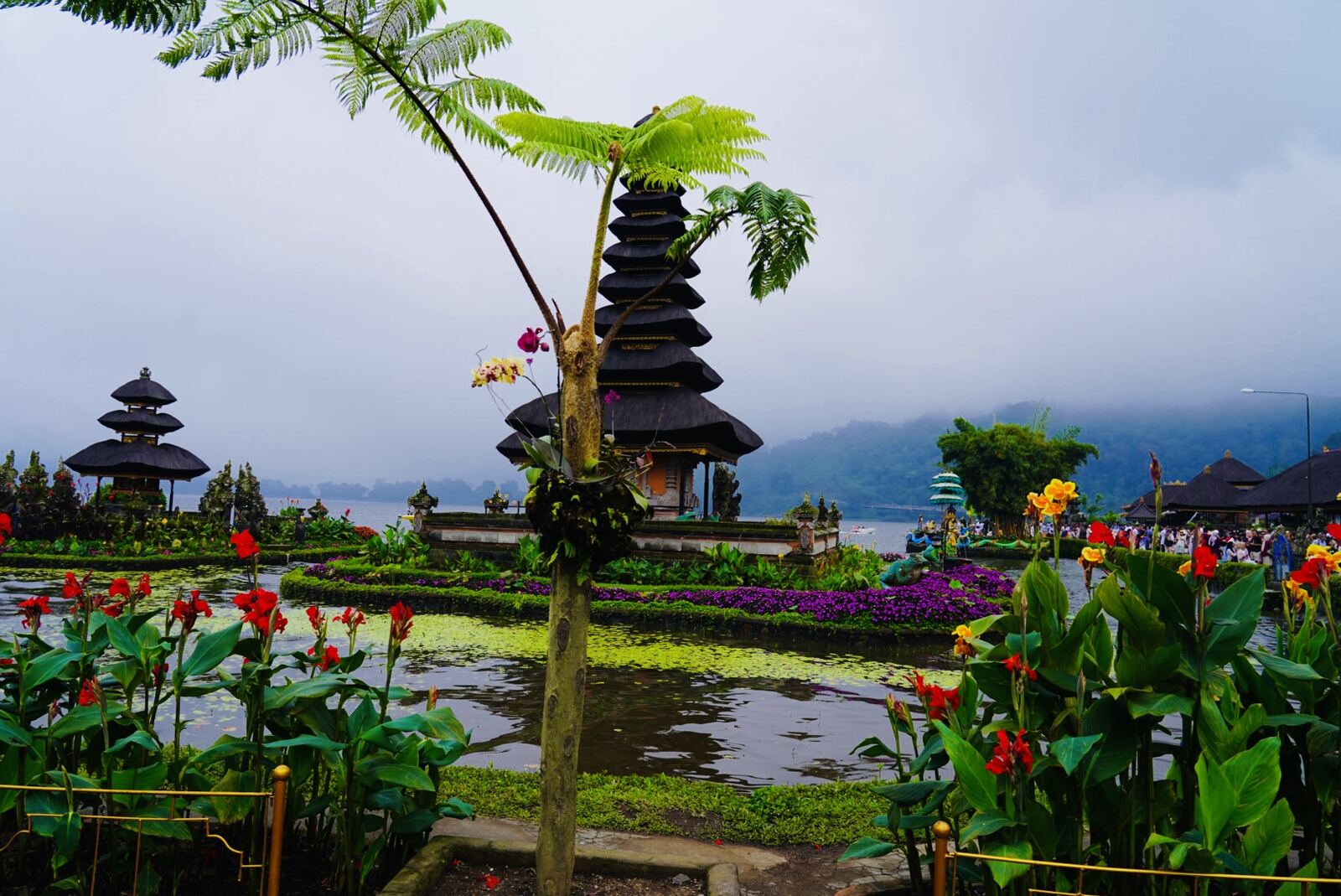
The island’s contemporary image has been claimed by tourism: beach clubs, luxury hotels, pools suspended above valleys, and the same frames replicated every day across social media. That Bali is real — but it is only one of its layers. Behind it lies a far older and more intricate world, one in which religion, nature, community and everyday life do not operate separately.
After years of returning regularly to Indonesia, I find myself less and less interested in the question: what must one see in Bali? Far more compelling is another: what are we actually seeing — and can we read the meaning of what we are looking at?
Between Sekala and Niskala
One of the keys to understanding Bali lies in the notions of sekala and niskala. The first refers to the visible, material world; the second to what is unseen and spiritual. Yet these are not two separate realities. In the Balinese way of perceiving the world, they interweave without pause.
That is why a mountain can be at once a feature of the landscape and a sacred space, water both a resource essential to growing rice and a part of religious practice, and a small offering laid outside a shop something as natural as the start of another working day.
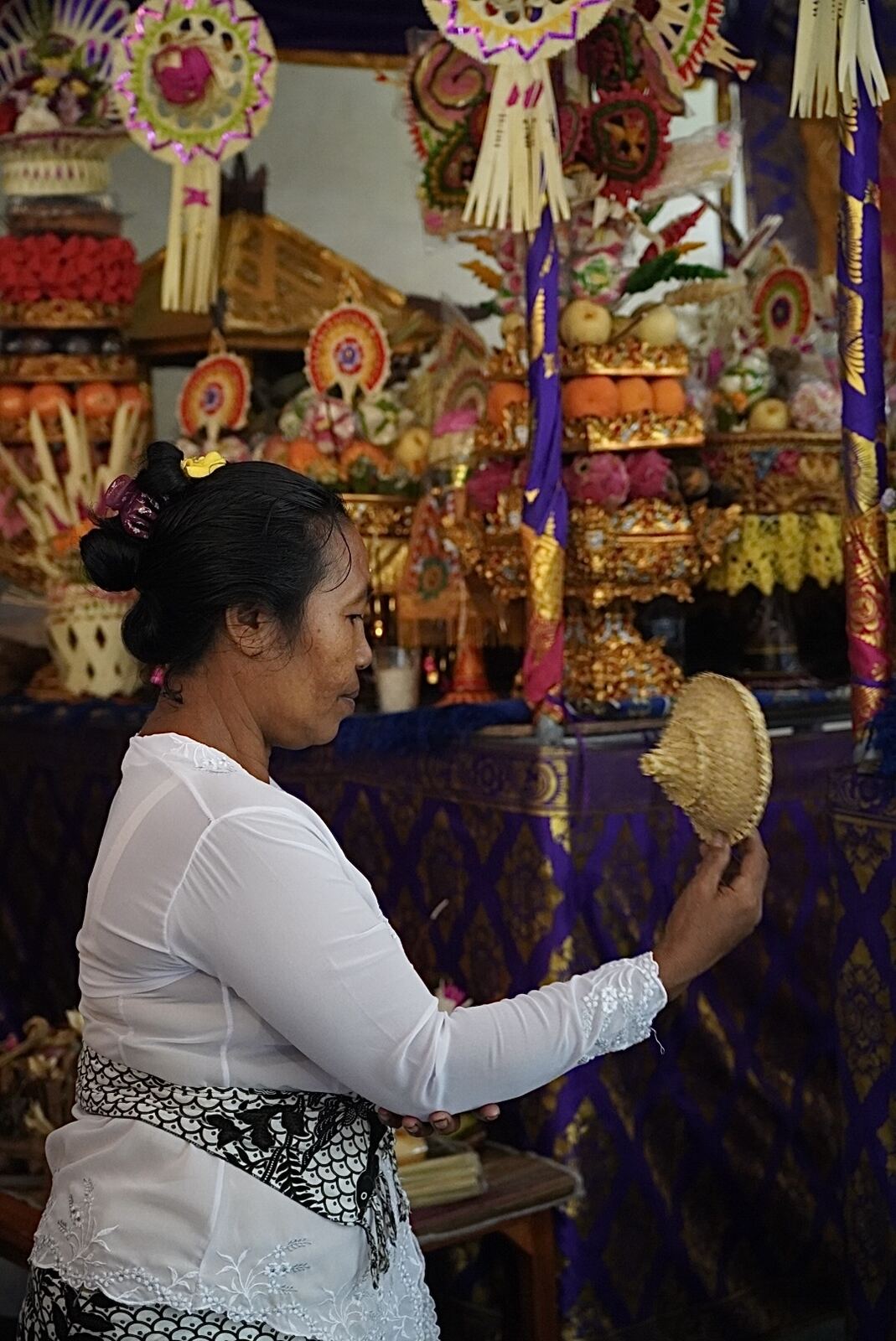
You can see it in the daily canang sari — small offerings woven from palm leaves, flowers and other gifts. To a newcomer they are, above all, beautiful. For the Balinese, their meaning does not end with aesthetics. They are part of the daily keeping of balance between a person and the world that surrounds them.
It is precisely here that one of the most important lines runs — between looking at Bali and trying to understand it.
A Landscape That Carries Meaning
The Balinese idea of harmony is well captured by Tri Hita Karana — a concept describing a person’s relationship with the spiritual realm, with other people, and with nature.
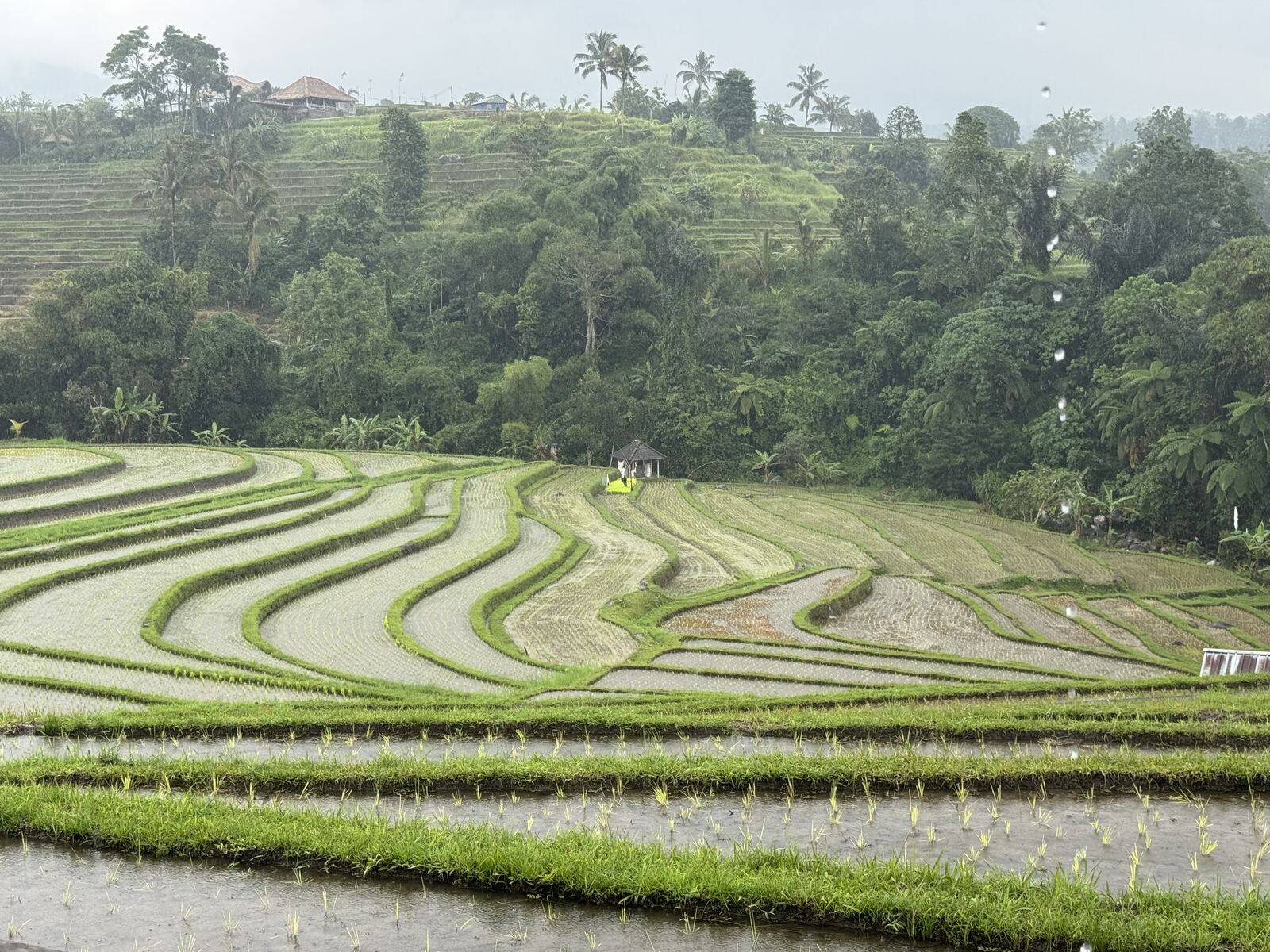
Nor is it merely a philosophical notion. Its material dimension can be seen in the subak system — the traditional way of managing water collectively across the rice fields. Canals, weirs, fields, farming communities and water temples form a single system in which economy, social life and religion flow into one another.
This is precisely why, in 2012, UNESCO inscribed the cultural landscape of Bali’s subak system on the World Heritage List. What is protected here is not a single monument, but a landscape shaped by a centuries-long relationship between people, water, religion and land.
We find the same way of thinking in the siting of temples. Pura Besakih, Bali’s most important temple complex, stands on the slopes of Gunung Agung. The sanctity of the mountain and that of the temple are not independent of each other. Each space lends meaning to the other.
See on the map: Pura BesakihTenganan. A History Written in Cloth
One especially fascinating place is Tenganan Pegringsingan, home to the Bali Aga community.
See on the map: Tenganan PegringsinganIt is here that geringsing is made — one of Indonesia’s most distinctive textiles, woven in the double ikat technique. This means that before weaving begins, both the warp and the weft threads must be dyed to a precise plan, and achieving the intended pattern demands extraordinary exactness.
Yet the most interesting thing is not the sheer difficulty of the craft. Geringsing carries social and ritual meaning, and the knowledge of its making is handed down between generations. For an art conservator, such an object is more than handicraft. It is a source — a material record of culture, no less than a painting, a sculpture or a work of architecture.
Tourism has reached Tenganan too, which is why I would not call the village “untouched”. Far more interesting is watching how the local community keeps its own traditions alive while living in a world that takes an ever keener interest in them.
When the Island Falls Silent
The relationship between the visible and the invisible world is felt with particular force during Nyepi, the Balinese Day of Silence that opens the new year of the saka calendar.
For twenty-four hours, the whole island changes how it functions. The streets empty, activity is curtailed, businesses close, and the airport suspends its normal passenger traffic. For a tourist it can be an extraordinary experience, but Nyepi is not a tourist attraction. It is a time of stillness, reflection and purification.
In a world where we have subordinated nearly everything to speed, availability and ceaseless consumption, one of the most visited islands on earth comes almost entirely to a halt for a full day.
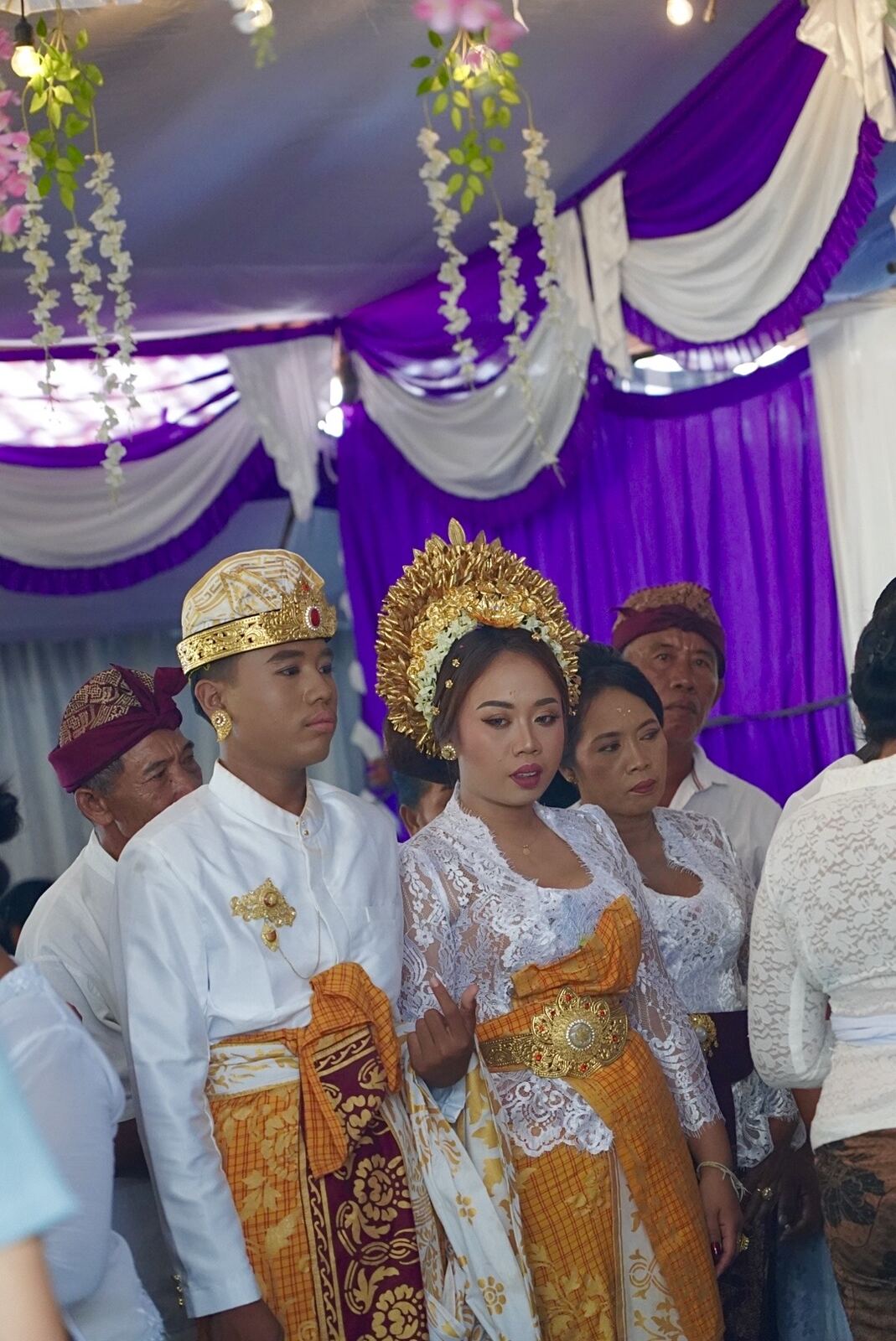
The same is true of Ngaben, the cremation ceremonies. Death here is not expressed solely through silence and withdrawal. It is accompanied by processions, richly decorated structures, gamelan music and community. Cremation is bound up with releasing the soul from the material body, and with its onward journey in the cycle of existence.
Only in coming to know such practices do we begin to understand why Bali cannot be reduced to a collection of temples and beautiful views. What we see is merely the material surface of a far larger system of meanings.
An Island Under Pressure
I have no wish, however, to paint yet another romantic picture of the “real Bali”. The island is changing at remarkable speed, and tourism is one of the main forces behind that transformation.
In the south, dense construction, investment pressure, traffic congestion, rising demand for water and growing volumes of waste are ever more visible. UNESCO, in describing the protection of the subak landscape, likewise points to its vulnerability to change and to the need for responsible tourism management.
This does not mean tourism is nothing but a threat. A telling example can be found in Pemuteran, on Bali’s north-west coast.
See on the map: PemuteranSince the early 2000s, coral reef restoration projects using Biorock technology have been developed there. Metal structures placed underwater become a substrate on which the reef can grow. What matters most is the local character of the undertaking — the involvement of a community whose life is also bound to tourism.
Pemuteran thus points to the other possibility: tourism can put pressure on a place, but guided well, it can also take part in protecting it.
Not far away lies Pulau Menjangan, part of the Bali Barat National Park.
See on the map: Pulau MenjanganI love this place for yet another reason. There, the human being ceases to be the central element of the landscape. The reef, the sea and the living world regain precedence — and we become merely guests.
Bali Beyond the Frame
I look for a similar Bali in Sidemen, in Munduk, and on the east coast in Amed.
Not because these places are “undiscovered”. They are not. Tourism is present in them, and they too are changing. But they let you see different proportions.
In Sidemen, the landscape of rice fields is still deeply bound to the life of local communities. Munduk reveals an entirely different, mountainous face of the island — cooler, planted with coffee and cloves. Amed, with its volcanic shoreline, its jukung boats and the silhouette of Agung commanding the horizon, is a reminder of how varied an island can be whose surface is scarcely larger than a great European metropolis.
Sometimes, though, to understand Bali better, it is worth leaving it.
Cross the strait to Java and the world changes almost at once. A different dominant religion, a different architecture, another language of space and rhythm of the street — all of it a reminder that Bali is only a small part of a vast and extraordinarily diverse Indonesia.
Near Banyuwangi lies Kawah Ijen.
See on the map: Kawah IjenThe famous blue fire, often mistakenly called “blue lava”, is in fact the effect of sulphuric gases burning as they escape from volcanic fissures.
A small detail — but it captures the way of travelling that interests me most. It is not enough to witness an extraordinary phenomenon. It is worth also knowing what, exactly, we are looking at.
Learning to Read a Place
After years of travelling, I have also come to understand luxury differently. For me it is no longer merely a hotel, a private pool or a secluded beach.
The possibility of staying in a place long enough to glimpse its second layer. To understand why the temple rose exactly here, what the pattern in the cloth means, why an offering appears before the house each morning — and why the mountain on the horizon can be something more than a feature of the landscape.
So I am not searching for the “real Bali”, because no single version of it exists.
The Bali of beach clubs is real. So is the Bali of rice fields, ceremonies, luxury hotels, temples, traffic jams, smartphones and daily offerings.
Sekala and Niskala. The visible and the invisible.
These realities exist side by side, and it is precisely the tension between them that I find most compelling. Which is why, with each return to Indonesia, it becomes harder for me to say: “I know Bali”.
I would rather say: I am learning, better and better, to read it.
And that is what Stories from Indonesia will be about — not only the places worth seeing, but above all what is worth knowing about them before you look.
Sources & further reading
- UNESCO World Heritage Centre — Cultural Landscape of Bali Province: The Subak System as a Manifestation of the Tri Hita Karana Philosophy — the official description of Bali’s cultural landscape, the subak system and its relationship to the Tri Hita Karana philosophy.
- UNESCO — Sustainable Tourism Strategy for the Cultural Landscape of Bali Province — materials on the impact of tourism development on Bali’s cultural landscape and the needs of its protection.
- Biorock Indonesia — Pemuteran — information on the coral reef regeneration projects carried out in Pemuteran.